
Showing posts with label Notes. Show all posts
Showing posts with label Notes. Show all posts
Wednesday, 27 September 2017

Tuesday, 19 September 2017
Pseudo Individuality
Pseudo Individuality
By this Adorno and Horkheimer meant that they way that the culture industry assembled products that made claims to 'originality' but which when examined more critically exhibited little more than superficial differences. An artist who fits this model is Justin Bieber and an artist who doesn't fit this model is Ed Sheeran.
Justin Bieber fits the model because has always been the typical and conventional pop sensation. This is because of his catchy music, good looks, love songs and the power to sell songs and albums effortlessly no matter how good or bad the music is. He has sold over 15million albums worldwide, got over 11billion views of YouTube and has sold out many tours and continues to be the conventional pop star.


However, an artist who is very popular and has been very successful despite not being conventional is Ed Sheeran. Unlike Bieber, he is not good looking and his early music was not very catchy or conventional but despite this he became very popular and has been very successful recently. Songs on his first album, +, such as A Team were very slow and not catchy but despite this the song and album grew and grew. However, he is becoming more conventional with regards to his songs with regards to them being more conventional and more catchy. Songs such as Shape of You and Galway Girl are more fast paced and he has collaborated with artists such as Stormzy, who he probably wouldn't have collaborated with in the past. This is in order to sell more albums and make more money.


Adorno and Horkheimer 2
X Factor Machine
Adorno and Horkheimer linked the idea of the 'culture industry' to a model of 'mass culture' in which cultural production had become a routine, standardised repetitive operation that produced demanding cultural commodities which in turn resulted in a type of consumption that was also standardised, distracted and passive.
This theory was heavily criticised due to people claiming that the theorists were being 'snobby' and trying to take mass culture out of normal culture due to them not liming the culture. This was known as 'cultural elitism'.
The capitalist corporation seems to enjoy an almost omnipotent form of domination and both the consumers and the creative artists are not separate from but are directly connected to this system of production.
Adorno and Horkheimer stressed the structures of economic ownership and control of the means through which cultural products are produced and argued that this directly shapes the activities of creative artists and consumers.
Standardisation- the argument here is that there is nothing spontaneous about the process of cultural production: it has become a routine operation that can be carried out in an office by the application of specific formulae.

Friday, 15 September 2017
Adorno and Horkheimer 1
Culture Industry

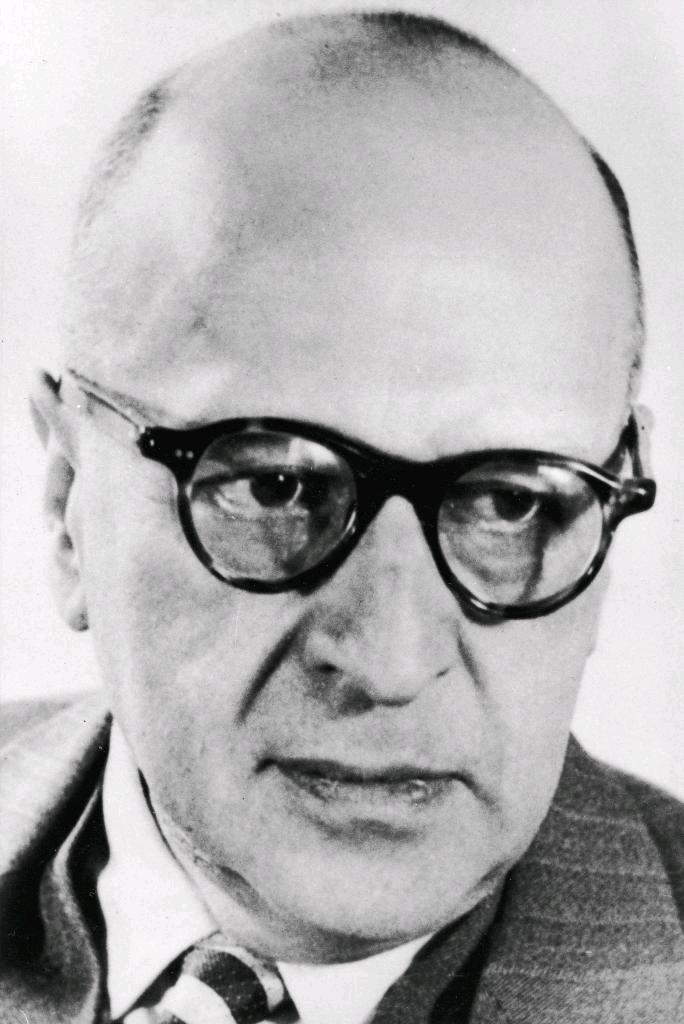
Adorno and Horkheimer were German theorists who had several theories on the culture industry. They adopted the term 'Culture Industry' to argue that they way in which cultural items were produced was analogues to how other industries manufactured vast quantities of consumer goods.
The pair argued that the culture industry exhibited on 'assembly line character' which could be observed in the synthetic planned method of turning out its products.
Wednesday, 13 September 2017
Postmodernism
Postmodernism
Postmodernism is the movement in all forms of art where you take something from a previous era and reference it in their piece now. Examples of this in the music industry is when you refernce a film or a music video in the current music video but making it a more updated and 21st century version. There are genre styles in the music world and they are;
- Experimental - establishing trends
- Cannon - woks within those trends to fix them and turn them into our cultural understanding
- Postmodern - make fun of these trends with the use of parodies etc.
These references made in the music videos are using intertextuality and this is done to possible appeal and attract a wider audience, therefore giving more awareness and publicity to their music. These references could appeal to a bigger audience because the reference to the older text will give possible nostalgia to the older audiences as well as attracting the younger and current audience.
An example of an artist using postmodernism in their song is the Backstreet Boys in their music video for "Everybody". They made several references to Michael Jackson's "Thriller" and this was done through the story of monster figures and how they turned from normal people into different creatures.


Monday, 11 September 2017
Major vs Independent
Major vs Independent
Who are the big 4 music labels?
The big 4 music labels who dominate the industry are; Warner Music, Sony BMG, Universal and EMI (which is no longer a major record label as it has been bought out by Universal.

How do they function?
Record labels are the companies that market recorded music and recorded music videos. Record labels engage in a wide range of functions in the music industry including new artist recruitment and development, music publishing and copyright enforcement.
What are Subsidiary Labels?
A subsidiary label is a label which is owned by a bigger and major record label and receives the money from the major label in order to sign deals with artists and market their music. An example of a major record label with many subsidiaries is Universal Music Group. Their subsidiary labels include;
- Interscope Records
- Geffen Records
- A&M Records
- Capitol Music Group
- Republic Records
- Island Records
- Def Jam Recordings
- Caroline Records
- Universal Music Group Nashville
- Universal Music Latin Entertainment
- The Verve Label Group
- Universal Music Enterprises
- Eagle Rock Entertainment
- Universal Music UK
- Universal Music France
- Universal Music Japan
- Universal Music Sweden

Some of these labels also have subsidiary labels who are owned/created by major artists such as The Weeknd and Eminem.
Independent Labels
Independent Music Labels are labels which are not back by a corporate backer and fund themselves and there are some notable differences by independent labels and major record labels, such as;
- Major labels wont let their artists keep rights or control over their music, whereas independent labels do, meaning they can sell it to adverts, film, television etc.
- Most major labels give their artist 10-15% royalty of their music whereas independent labels give them 40-75% in royalty.
An example of a very successful record label which is independent is the Domino Recording Company. This company is based in London and have artists such as the Artic Monkeys signed to them. They are in fact the longest running and most successful indie label. They have had artists with albums and singles reaching number one in the UK's charts.
Another well known independent music label is Boy Better Know. This label was created in 2005 by JME, Wiley and Skepta, who have all gone on to be very successful grime artists. They have also attracted the attention of worldwide star Drake and have previously collaborated with them.

Music Industry Crisis
Music Industry Crisis
For most of the 20th Century record companies made money by selling a tangible product- a vinyl disc or a CD. You owned music by having a disc collection. With the internet the music industry has had to adapt as CD sales are falling each year. The 'product' is now bought online as a single song or album, and exists only as an item on an iPod, mobile phone or computer.
A commodity (in this case music) always depends for its status and its value on it relative scarcity; once the reproduction and distribution of that commodity become effectively free, then it necessarily loses that value and that status.
In 2009, 95% of music was downloaded illegally.
Friday, 7 July 2017
Goodwin's Theory
Goodwin's Theory (1992)
Goodwin's Theory is the theory which states what codes and conventions every music video follows.
1. Music videos demonstrate genre characteristics (e.g. stage performance in rock video, dance routine in pop etc).
2. There is a relationship between lyrics and visuals.
3. There is a relationship between music and visuals.
4. The demands of the record label will include the need for lots of close ups of the artist and the artist may develop motifs which recur across their work (a visual style).
5. There is frequently references t notion of looking (screen within screens, telescopes, etc) and particularly voyeuristic treatment of the female body.
6. There is often intertextual references (to films, TV programmes other music videos, etc)
Thursday, 6 July 2017
Technical Codes - Devlopment
Development
- The key innovation in the development of the modern music video was video recording and editing processes along with the development of a number of related effect such as chroma-key and green screen/blue screen.
- The advent of high quality colour video tape recorders and portable video cameras enabled many pop acts to produce promotional videos quickly and cheaply in comparison t the relatively high costs of using film.
In the 1990s- became common:
- Most common form of editing associated with the music promo is fast cut montage
- Many images impossible to grasp on first viewing thus ensuring multiple viewing
- Split screens, colourisation are also commonly used effects
- Non-representational techniques, in which the musical artist is never shown, became more common
Wednesday, 5 July 2017
Technical Codes - Editing
Editing
- Though the most common form of editing associated with the music promo is fast cut montage , rendering many of the images impossible to grasp on first viewing thus ensuring multiple viewing, there are videos which use slow pace and gentler transitions to establish the mood.
- This is particularly apparent for the work of many female solo artists with a brand audience appeal, such as Dido.
- Often enhancing the editing are digital effects which play with the original images to offer different kinds of pleasure for the audience. This might take the form of split screens, colourisation and of course blockbuster film style CGI.
- Bitter Sweet Symphony - quick cuts, narrative is a man walking down the street, close up, mid shot, point of view, depth of field.
Tuesday, 4 July 2017
Technical Codes - Cinematography
Cinematography
- Camera movement may accompany movement of performers (walking, dancing etc) but it may also be used to create a more dynamic feel to stage performance, by for instance constantly circling the band as they perform on stage.
- The close up does predominate as in most TV, partly because of the size of the screen and partly because of the desire to create a sense of intimacy for the viewer. it also emphasises half of the commodity on the sale (not just the song, but the artist, and particularly the voice).
Friday, 16 June 2017
Codes of Cinematography in Videos
Technical Codes - Cinematography
- As with any moving image text, how the camera is used and how images are sequenced will have a signifiant impact upon meaning
- Camera movement, angle and shot distance all need to be analysed.
- Fast-paced editing, in time with the song.
Choosing a Music Video
- Harry Styles - Sign of the Times
- Sam Smith - Stay with Me
- Adele - Hello
Pick 1 minute from the video, copy it onto the storyboard shot by shot with the inclusion of the shots being wrote down. The shot and editing must match the real music video.
Thursday, 15 June 2017
Pop Music TV Shows
Pop Music TV Shows
- 1970: The record industry discovers TV - this was shown as a great opportunity to promote their artists.
- They focus on producing short 'Promos', early music videos which started to replace the lure performance of the artist on the TV stage.
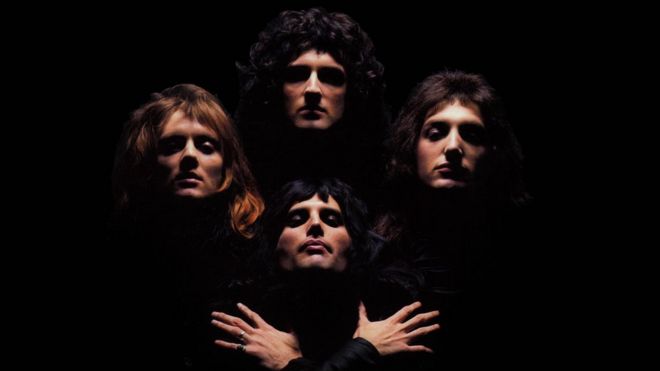
- 1975: Bohemian Rhapsody, a groundbreaking video released by Queen, marked the beginning of the video era and set the language for the modern music video. The video is considered one of the first to use advanced visual effects. Special effects played a vital role in propelling this video forward.
Wednesday, 14 June 2017
History of Music Videos
History of Music Videos
- The invention of film and cinema brought about the possibility of combining music and moving images.
- Advances in technology have turned the music video industry into what it is today but you might be surprised at where it came from.
- Been around since the 1920s. Musicians such as jazz player Bessie Smith first featured in music videos.
- 1965: Bob Dylan Films Subterranean Homesick Blues as a segment for D.A. Pennebaker's film 'Don't Look Back'. This was widely credited as one of the first modern music videos. This is also used as an intertextual reference regularly.


Subscribe to:
Posts (Atom)

-
Yesterday on the 22nd January, myself, Kaan and Kallum went to Bexleyheath to buy some props and items of clothing that we intend to use in ...
-
Pseudo Individuality By this Adorno and Horkheimer meant that they way that the culture industry assembled products that made claim...

